Small Service Business Lessons and One Client Record
Running a small service business means doing the work and also running everything around it. The simplest fix is to keep each client in one place, so bookings, payments and messages all attach to the same record. That is what Pacten is built to do.
A founder who once ran a mobile detailing business in Atlanta wrote down five lessons from it. We read the personal essay on Substack and kept coming back to one thread. It is anecdotal, one person's story. But owners in many trades will recognise it.
The five lessons, in short
The admin around the job takes more time than you expect.
Getting customers is a skill, not luck.
A system beats your memory.
Your reputation travels faster than your marketing.
Starting small is an advantage.
Two of these are about people. Two are about habits. One is about tools. Together they describe a day where the work is good and the paperwork keeps slipping.
Where the day actually goes
The writer enjoyed the detailing itself. Scheduling, tracking jobs and chasing payments were what ate the hours.
Picture a phone buzzing on the roof of a car while your hands are full of foam. A customer wants to move their slot. You say you will sort it later.
Later, the message is in one app, the slot is in a calendar, and the payment note is on a scrap of paper. Nothing is wrong with any of them. They just do not know about each other.
That is lesson three in action
The essay names the cost plainly: a missed appointment, a forgotten payment, an unanswered message. Memory is the glue holding the tools together, and memory gets tired.
The essay's advice is modest. Even a simple spreadsheet or calendar beats trying to remember it all. We agree. If you are a one-person business with a handful of regulars, a spreadsheet is a fine place to start.
The real problem is scattered clients
Look at the lessons again. Getting customers, keeping them, and being reliable for them all depend on knowing who each person is and where things stand. When that knowledge is split across a notes app, a calendar, a payment tool and a message thread, you are the one stitching it together.
Every extra tool is another place to type the same name. Every retyped name is a chance for the details to drift apart.
What Pacten does about it
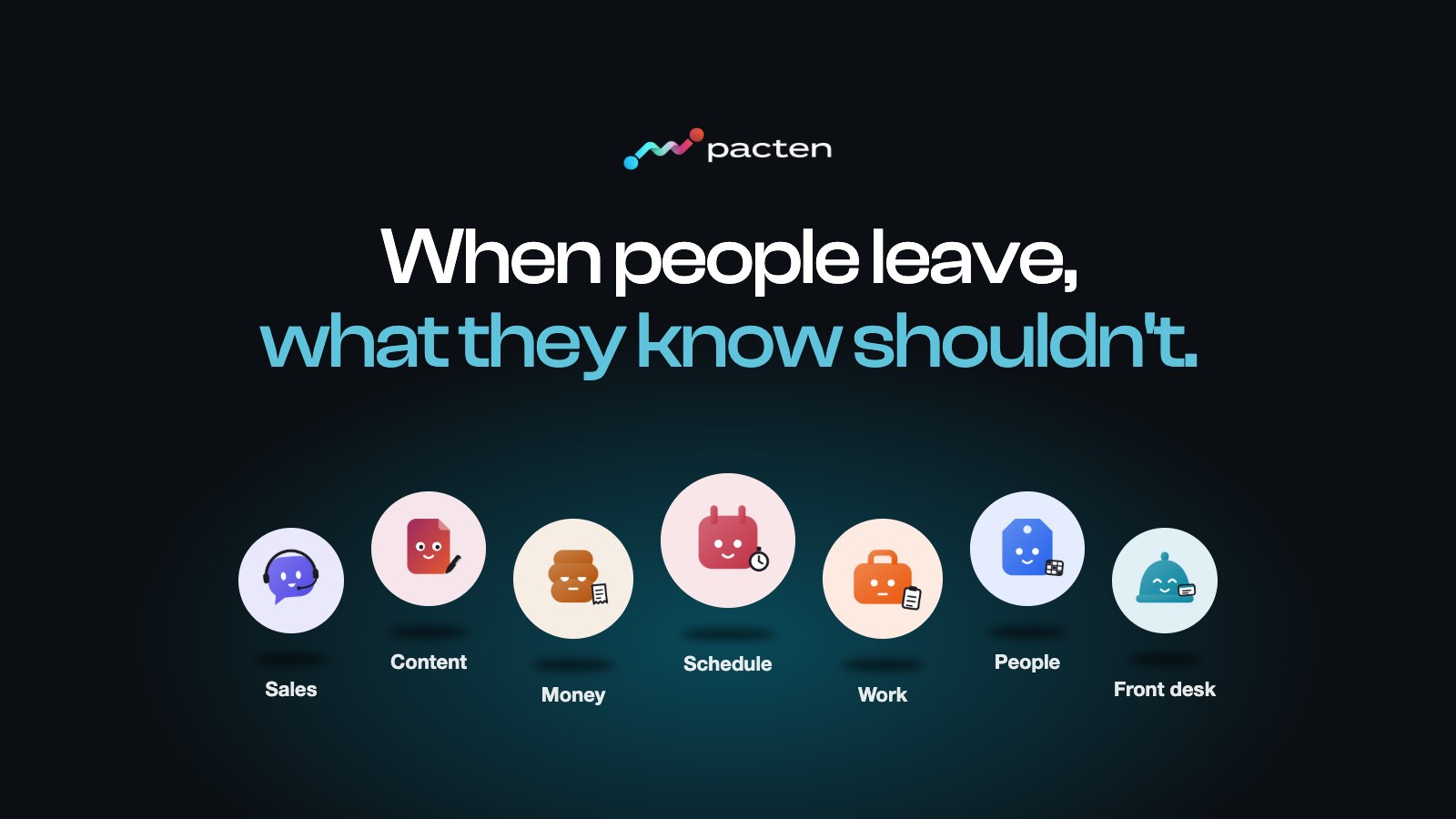
Pacten was built so a client exists once. You add them one time, and everything that happens with them gathers under that one name: the deal, the appointment, the agreement they signed, the job and its tasks, the conversation, the invoice and the payment.
Nobody retypes a client into a second tool. Pacten AI works from that same record, so when you ask it something, it sees the whole picture and the same numbers you do.
It also keeps working where you already are. You can ask Pacten AI in Slack, and it also works inside Claude and ChatGPT.
If you want the full tour, start at our apps page. If you want to know what it costs, the plans are on the pricing page.
A simple way to start, borrowed from the essay
The essay ends with a short list for anyone starting a service business. It is practical, and it fits any tool you choose.
Pick a service you can deliver well with what you have.
Get your first customers from people who already trust you, then ask for referrals.
Set up a simple way to track bookings and payments from day one.
Write down your prices and service menu so you are not making it up each time.
The third and fourth items are where a single client record helps most. Prices written once and payments tracked from the first job mean you never have to rebuild the story later.
What we would not claim
One record does not win you customers. Lesson two stands: finding people and giving them a reason to choose you is its own skill. Lesson four stands too. Reliable work still does the most marketing.
What a single record does is take away a chore. You stop being the person who carries every detail in your head, so you have more attention for the work and the customer in front of you.
Try it on a real client
The easiest test is small. Take one current client and put them into Pacten. Add their next appointment and their latest invoice. See whether you can answer "where do we stand with this person?" in one place.
Starter is free for 7 days, so you can try it without committing. For more notes from owners and the people who build for them, browse our articles.
Frequently asked questions
- Do I need software to run a small service business?
- Not on day one. The essay behind this article says even a simple spreadsheet or calendar beats relying on memory. Software starts to help when clients, bookings and payments are spread across too many places to keep straight.
- What does it mean for a client to exist once in Pacten?
- You add the client one time. Their deal, appointments, agreements, project work, messages, invoices and payments all attach to that single record, so nobody retypes them into another tool. Pacten AI works from the same record.
- Does Pacten help me find new customers?
- Pacten keeps the details of the clients you have in one place, and Pacten Studio helps you draft and schedule social posts, publishing only after a person approves. Finding customers is still a skill that takes your own effort.
- How much does Pacten cost?
- The plans are Starter, Operator and Platform, priced per user with no minimum. Starter is free for 7 days, while Operator and Platform bill from day one. Prices differ by region, so check the pricing page for your own.
- Is this advice only for detailing businesses?
- No. The lessons come from a mobile detailing business, but they apply to anyone who sells a service, from tutors to freelancers to local trades. The shared problem is keeping client information from scattering.