One-Person Company With AI Agents: What It Takes
One founder. Nine AI agents. More than 100,000 users.
That is not a prediction of what business might look like someday. It is already happening.
Claire Vo, founder of ChatPRD, runs a company with more than 100,000 users while remaining its only full-time human employee. Her nine specialised AI agents help handle sales enquiries, manage her calendar, support customers and keep marketing moving.
Now imagine building your own company with that kind of backup.
One agent books the meeting. Another prepares the follow-up. A third checks whether the invoice has been paid. Suddenly, you're not just one person doing the work of a team. You're one person directing a team of AI agents.
But there's a catch: nine agents with nine different versions of the truth can create nine times the confusion.
Picture a scenario where the booking agent doesn't know the client has already rescheduled? Or the sales agent misses what was agreed in the last meeting? Imagine how much impact on business will be recorded when the finance agent is working from an outdated payment record? Exactly! It can go south real fast.
The future of the one-founder company isn't simply about having more AI agents. It's about giving every agent the same, reliable picture of the business.
That means one connected client record, where conversations, bookings, work, invoices and payments belong together.
That's the foundation Pacten is built on. Pacten AI offers a centralised workflow for all buisness operations managing activities and business-as-usual from one tool. Pacten prepares the routine work, brings the relevant facts together and puts the next move in front of the founder for a yes. Because running a company alone shouldn't mean keeping the entire company in your head. Pacten is built that way, and Pacten AI prepares routine work for the founder's yes.
See Also:
What the report describes
An IBTimes report looks at founders who run companies largely alone, with AI agents covering the work a team would normally split up.
One founder runs a product-planning platform with more than 100,000 users. She says she is its only full-time human. She has nine agents, each with a single job: answering sales inquiries, managing her calendar and preparing meeting briefings, analyzing her podcast, and helping with marketing and support. Her reason for so many is simple. She did not want to be the single point of failure.
Another founder, who runs an educational platform for children, uses an agent that checks his finances each morning. It looks at balances, subscriptions, cancellations, failed payments and refunds, then writes him a report. He reads it and decides what to do.
A London consultant took a third route. Instead of a separate chatbot for every task, he connected his client details, meeting notes, project files and contacts. AI tools then update records, create tasks, draft emails and prepare a daily briefing. He estimated that AI cut his work on one client project by about 45%. The setup costs around £250 a month. Important messages still wait for his approval.
The part that is easy to miss
Look at what the three setups share. None of them is a clever agent floating on its own. Each one reads from something solid: a set of accounts, a calendar, a connected record of clients and projects.
That is the real lesson. An agent that drafts a follow-up needs to know what was promised on the last call. An agent that chases an invoice needs to know the work was delivered. If those facts live in five tools, the founder becomes the glue, and the glue is the very job they hoped to hand off.
Solo is not a shortcut
The report is careful on one point, and so should we be. Solo founders are becoming more common, but results are uneven. A payments company's analysis found that median first-half revenue for solo-founded startups on one incorporation platform fell 23% in 2025 compared with the year before. Meanwhile, revenue for the top 10% rose 19%.
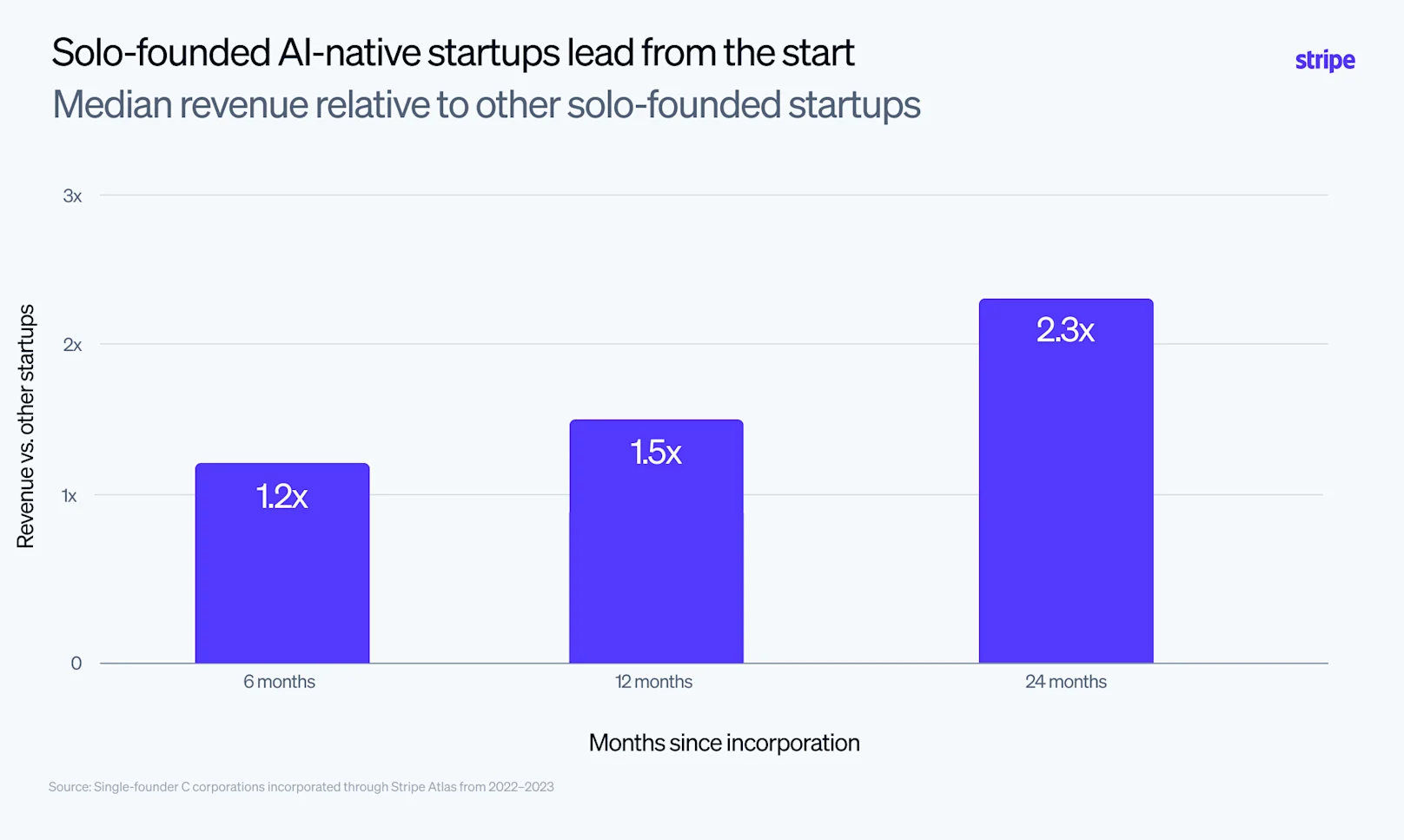
So AI agents do not guarantee a good business. They may lower the cost of running a small one. The consultant himself said part of his revenue growth came from his young business simply maturing.
What a one-person setup needs underneath
If you are thinking about running lean, check these before you pick any agent:
One client record. The deal, the booking, the contract, the project and the invoice should point to the same person.
One set of numbers. Money owed, money paid and money forecast should come from the same books.
A clear yes. Anything that goes to a client or moves money should wait for you.
A log. You should be able to see what was prepared, by whom and when.
None of these is glamorous. All of them decide whether an agent saves you an hour or costs you an afternoon of cleanup.
Read On:
How Pacten handles it today
Pacten keeps clients, bookings, contracts, invoices, projects and people in one workspace. A deal in CRM, the booking, the contract, the project and its tasks, every message, the invoice and the payment all sit on the same client record. Nobody re-types a client into a second tool, and Pacten AI sees the whole picture.
On top of that sits an AI team: a Sales Coordinator, Content and Community, Money, Schedule, Work and People Coordinator. They prepare the routine pieces, such as replies, follow-ups, reminders and drafts. Then they wait. Nothing is sent, published, paid or changed until a person says yes, and everything they do is logged.
For a founder working alone, that is the useful shape. The routine work is ready when you sit down. The decisions stay yours. You can read more on the guides page, or see how the Pacten plans compare on pricing. Each plan starts with a free trial.
Start with the money view
If you are not sure where to begin, begin with finance. Profit and loss, cash flow and the aging reports are computed live from the journal rather than typed up separately, as the finance reports guide explains. A morning check on what is owed and what is late is a small habit, and it is one that a lean company can keep up.
For more on running a small business with AI, browse our articles.
Frequently asked questions
1. Can one person really run a company with multiple AI agents?
Yes. AI agents can take on specialised, repetitive tasks such as responding to enquiries, scheduling meetings, preparing follow-ups, supporting customers and organising business information. A founder can coordinate several agents instead of personally handling every operational task. The key is having the right systems in place to keep their work connected.
2. What is an AI agent, and how is it different from a chatbot?
A chatbot primarily responds to prompts and questions. An AI agent can work towards a goal by carrying out a series of tasks, using information and tools available to it. For example, an agent might help manage a booking, prepare a client follow-up or organise information for a founder to review.
3. Why does a solo business need one central client record?
Because every part of a client relationship is connected. A conversation can lead to a booking, a booking can lead to a project, and a project can lead to an invoice. When these details are scattered across different tools, agents may work with incomplete or outdated information. One connected client record gives the founder and their agents a shared source of business information.
4. What happens when AI agents work from different sets of information?
Confusion. A sales agent might promise something an operations agent doesn't know about. A scheduling agent might use an outdated booking detail, while a finance agent misses a payment update. Without shared, reliable information, adding more agents can create more work instead of reducing it.
Frequently asked questions
- Can one person really run a company with AI agents?
- The report describes founders who do, with agents handling sales replies, calendars, finance checks and briefings. It also notes that results vary widely, and that starting alone is easier than building something that lasts.
- Why does a shared client record matter for AI agents?
- An agent can only be as accurate as the facts it reads. If clients, bookings and invoices are spread across several tools, the agent works from partial information and the founder has to reconcile the gaps by hand.
- Will Pacten AI send messages or pay invoices on its own?
- No. Pacten AI prepares replies, follow-ups, reminders, drafts and invoices, then waits for a person's yes before anything is sent, published, paid or changed. Every action is logged.
- Where can I use Pacten AI?
- Pacten AI works inside Pacten, in Slack, and inside Claude and ChatGPT. Wherever it is asked, it answers from your business records and only shows a person what they are allowed to see.
- How much does Pacten cost?
- Pacten has three plans, Starter, Operator and Platform, each with a free trial first. Prices differ by region and are listed on the pricing page.